You wash your face, lean toward the mirror, and there they are again. The dark spot near your cheek. The mark that lingered long after a breakout healed. The tone that looks patchy no matter how much makeup you smooth on top.
Two ingredients keep showing up as the fix: vitamin C and niacinamide.
Both can brighten your skin and soften dark spots. They simply take different paths to get there. Pick the wrong one for your skin, and you can wait months for results that were never coming. Pick the right one, and you protect every bit of progress you make.
You are about to see exactly which one your skin wants, plus the single step that makes either serum work harder.
The Short Answer
- Niacinamide often has the edge for post-acne marks, redness, sensitive skin, and uneven tone.
- Vitamin C often wins when dark spots come with dullness, sun damage, and fine lines.
- Many people get the best result from using both, backed by daily sunscreen.
Let’s break down why.
How Vitamin C Works
Vitamin C is an antioxidant your skin already contains. Applied on top of your skin, it fights the daily damage from sun and pollution, and it steps into the process that creates melanin, the pigment behind most dark spots.
A review of controlled studies found topical vitamin C produced clear lightening in measured pigmentation, plus smoother skin and softer lines. The trade-off: results build slowly, so steady use over weeks and months does the heavy lifting.
Reach for vitamin C when your skin shows:
- Sun spots and UV discoloration
- Dullness and lost glow
- Uneven tone
- Fine lines and early aging
- A need for morning antioxidant protection
How Niacinamide Works
Niacinamide is a form of vitamin B3, and it works from a different angle. Your skin makes pigment in tiny packages, then ships those packages up to the surface cells. Niacinamide slows that delivery, so less pigment reaches the top.
In lab testing, niacinamide cut that pigment transfer by 35 to 68 percent. In a skin study, 5 percent niacinamide lowered hyperpigmentation and brightened skin after about four weeks. It also calms redness and strengthens your skin barrier, which makes it gentle enough for reactive skin.
Reach for niacinamide when your skin shows:
- Post-acne dark marks
- Redness
- Sensitivity or easy irritation
- Oily or combination skin
- A barrier that needs support
Vitamin C vs. Niacinamide at a Glance
| Concern | Vitamin C | Niacinamide |
| Dark spots | Very good | Very good |
| Post-acne marks | Very good | Excellent |
| Dullness and glow | Excellent | Very good |
| Sun damage and fine lines | Excellent | Very good |
| Redness | Good | Excellent |
| Barrier support | Good | Excellent |
| Sensitive skin | Can tingle | Usually gentle |
| Best time | Morning | Morning and/or night |
Which Is Better for Dark Spots?
Both help. The cause of your spots points you to the winner.
- Choose niacinamide when your spots trace back to acne, irritation, redness, or sensitive skin.
- Choose vitamin C when your spots come with sun damage, dullness, or fine lines.
For plain, all-over unevenness, pairing the two covers the most ground.
The Smarter Strategy: Use Both
You may have heard that vitamin C and niacinamide cancel each other out. For modern formulas and everyday use, that old rule falls apart. They work through different paths, so they team up well. Vitamin C brings antioxidant power and photoaging support. Niacinamide brings even tone, calm, and barrier strength.
Mary Kay makes this pairing easy:
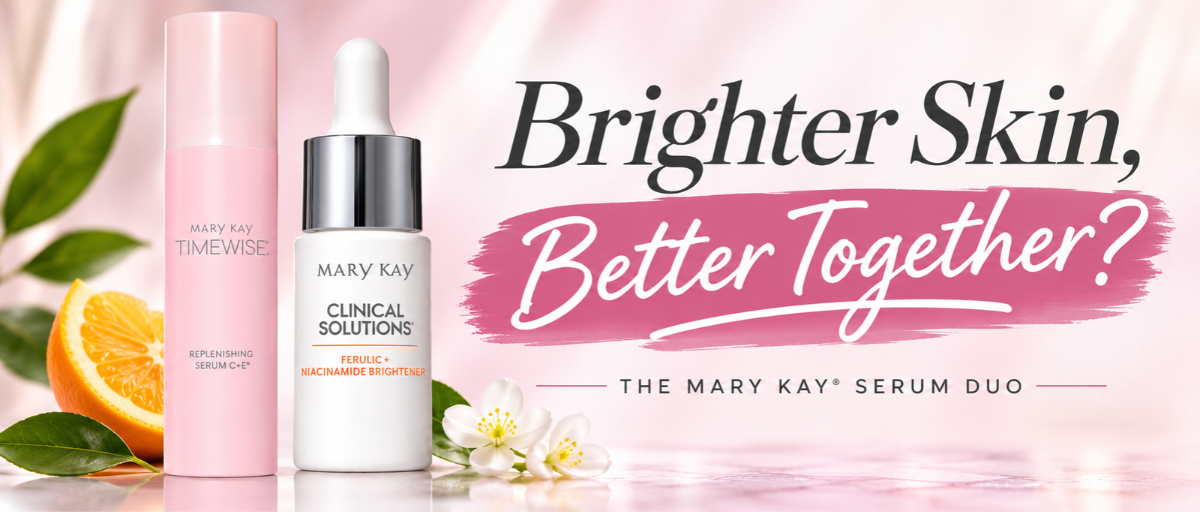
- TimeWise Replenishing Serum C+E® delivers three sources of vitamin C plus vitamin E to help fade discoloration and even your tone, morning and night.
- Mary Kay Clinical Solutions® Ferulic + Niacinamide Brightener pairs niacinamide with ferulic acid and patented navy bean extract to target dark spots and brighten uneven tone. In testing of its key ingredients, pigment production dropped by 62 percent in lab measures.
Layer the vitamin C serum first, follow with the niacinamide brightener, and you give your skin two brightening tools that pull in the same direction.
Does a Higher Percentage Mean Better Results?
You might be wondering if a bigger number on the bottle works faster. More is not always better.
- Vitamin C: the form, pH, packaging, and freshness matter as much as the percentage on the label. A well-built serum beats a high number that has gone stale.
- Niacinamide: much of the clinical proof sits around 2 to 5 percent. You gain little by chasing 10 or 20 percent, and a very high level can leave sensitive skin red.
Vitamin C vs. Niacinamide for Sensitive Skin
Niacinamide is the easier starting point for reactive skin. Strong, low-pH vitamin C can sometimes tingle, sting, or dry you out. That does not rule it out. Ease in every other morning, then build up as your skin stays calm.
Keep your products gentle. The American Academy of Dermatology advises people with melasma to skip anything that burns or stings, because irritation itself can deepen dark spots.
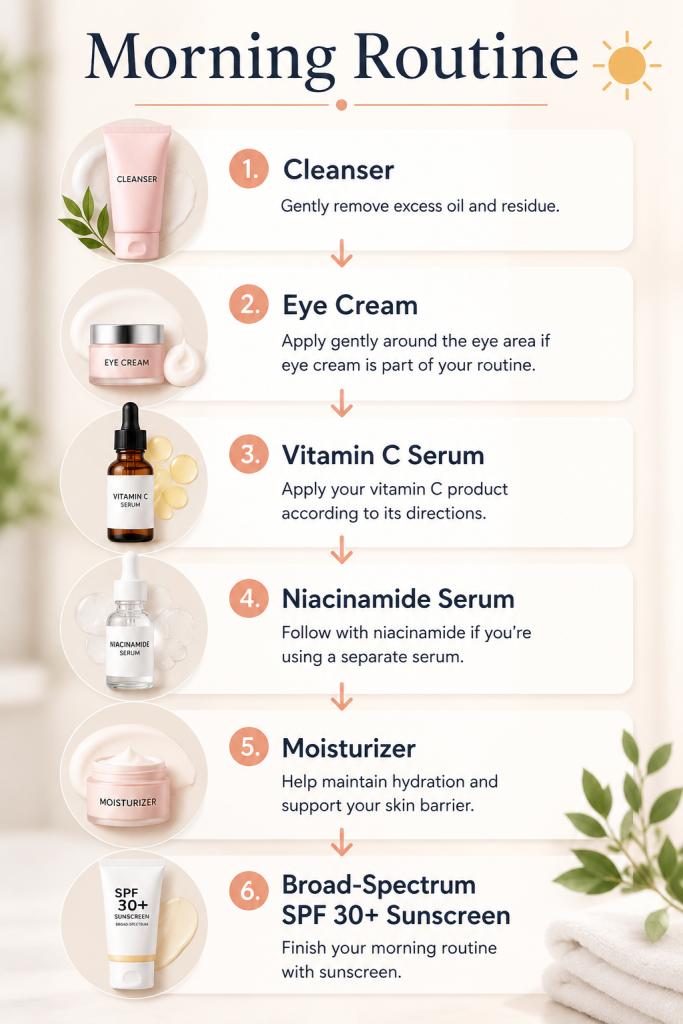
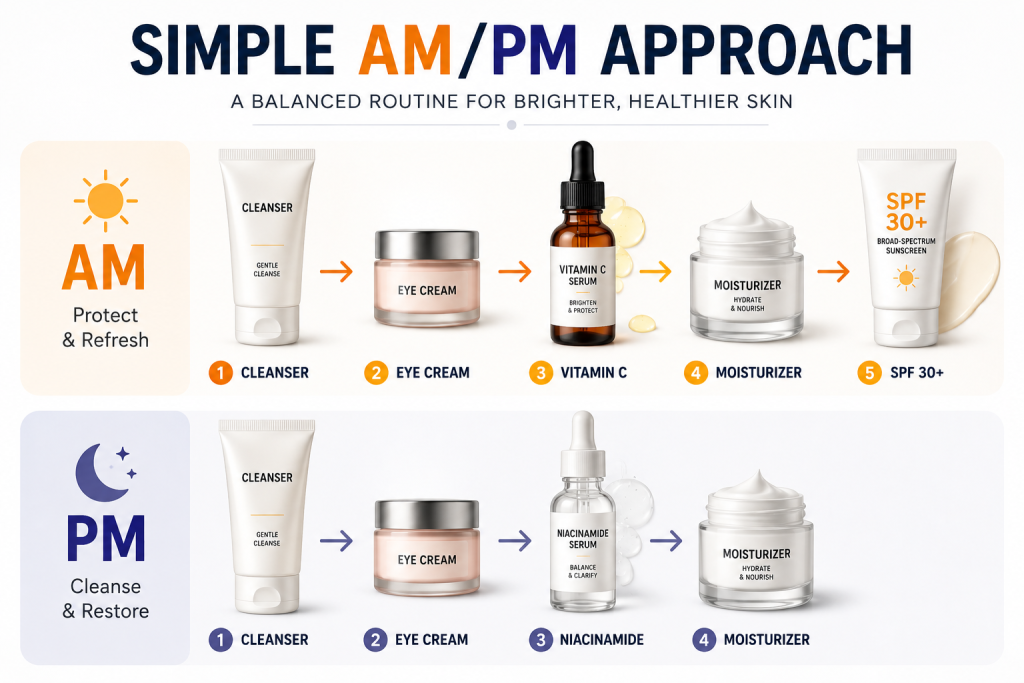
How to Layer Them: A Simple Morning Routine
- Cleanse. Lift off oil and residue without stripping your skin.
- Eye cream. Pat gently around the eyes.
- Vitamin C serum. Smooth over clean skin.
- Niacinamide brightener. Follow as your second booster.
- Moisturizer. Lock in hydration and support your barrier.
- Broad-spectrum SPF 30 or higher. Finish every single morning.
Prefer a lighter routine? Use vitamin C in the morning and niacinamide at night. Each ingredient still earns its keep, and you make any irritation easier to trace.
How Long Until You See Results?
Dark spots fade on their own schedule. Niacinamide shows measured improvement around four weeks. Vitamin C often needs longer, steady use to show its brightening.
The American Academy of Dermatology notes that a spot a few shades darker than your natural tone can take 6 to 12 months to fade once you stop what caused it. Deeper pigment can take longer. Consistency beats constant product-swapping every time.
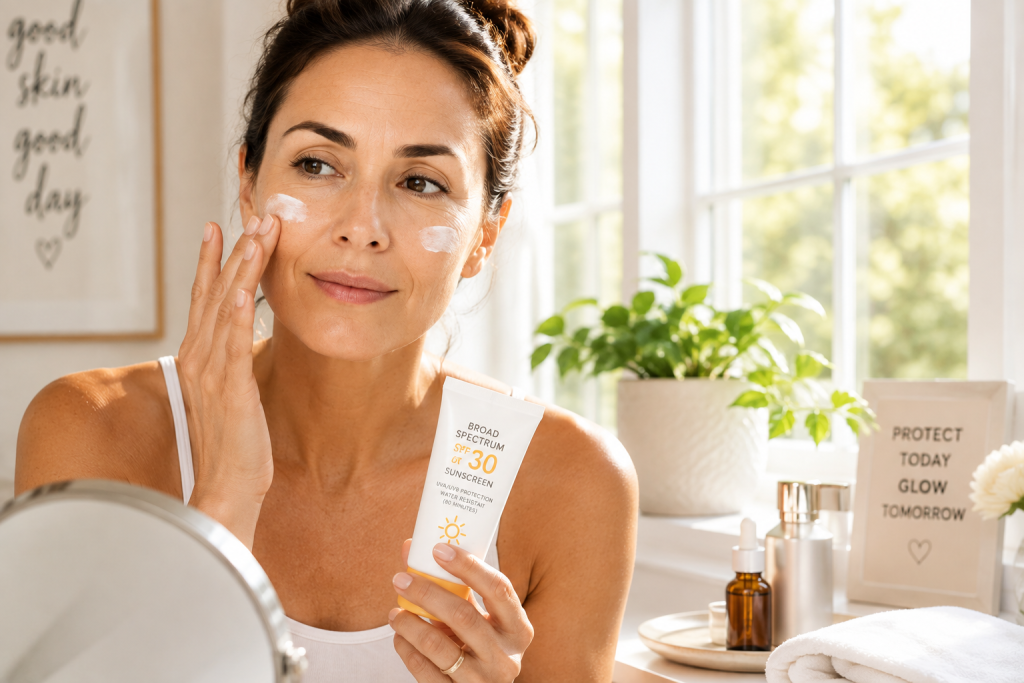
| Your Most Powerful Dark-Spot Step: Daily Sunscreen You can layer the best serums in the world and still stall your progress if sun reaches your skin all day. Sun protection holds the whole plan together. The American Academy of Dermatology recommends sunscreen that is: SPF 30 or higher (SPF 30 blocks about 97 percent of UVB rays), Broad-spectrum, Water-resistant. Reapply every two hours outdoors, and after you swim or sweat. For melasma or stubborn spots consult a dermatologist. A sunscreen with iron oxides adds protection against visible light, another trigger for dark spots. |
Vitamin C vs. Niacinamide: Which Should You Choose?
| If your main concern is… | Best starting choice |
| Post-acne dark marks | Niacinamide |
| Redness plus uneven tone | Niacinamide |
| Sensitive skin plus dark spots | Niacinamide |
| Oily skin plus uneven tone | Niacinamide |
| Dullness | Vitamin C |
| Sun-related discoloration | Vitamin C |
| Fine lines plus dark spots | Vitamin C |
| Overall anti-aging | Vitamin C |
| General uneven tone | Both |
| Maximum brightening | Both, plus daily SPF |
| Suspected melasma | Consult a dermatologist as soon as possible (plus recommended strict sun protection) |
The Bottom Line
So which is better, vitamin C or niacinamide? There is no single champion. There is only the right match for your skin.
Choose niacinamide for post-acne marks, redness, sensitivity, and barrier support. Choose vitamin C for dullness, sun damage, and visible aging. If your skin handles both, use them together and give yourself the widest path to brighter, more even skin.
Then protect it. Wear broad-spectrum SPF 30 or higher every morning, and watch your hard work last. Without it, everyday sun keeps adding new spots faster than any serum can fade them.
Ready to build your brightening routine? Your Mary Kay Independent Beauty Consultant can match the right serum to your skin and help you start today.
For dark spots that stay stubborn, change fast, or look unusual, see a board-certified dermatologist. Different spots have different causes, and the right diagnosis makes every product work harder.
This article is for general education and does not replace diagnosis or treatment by a dermatologist.