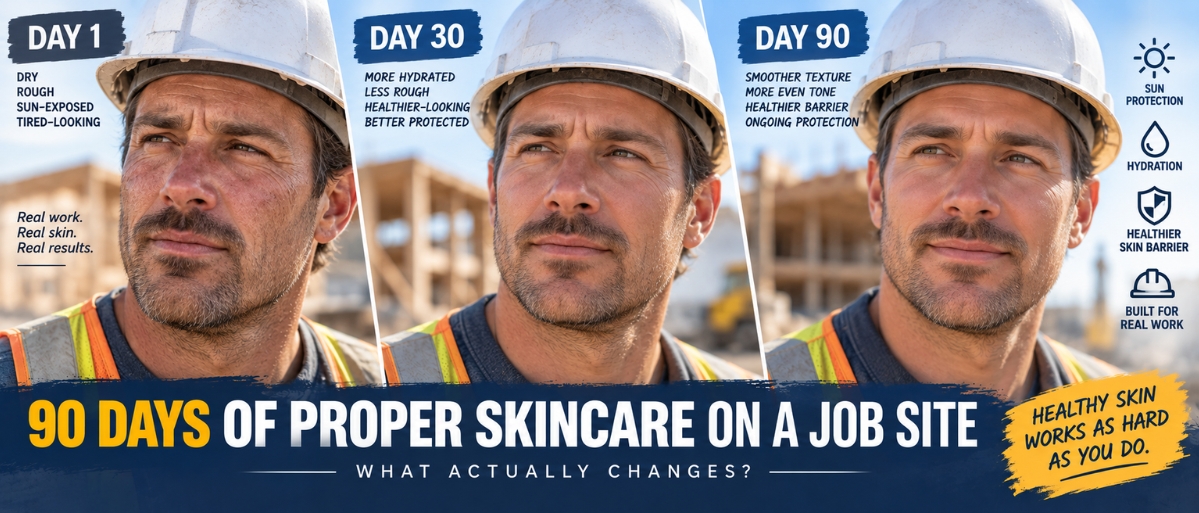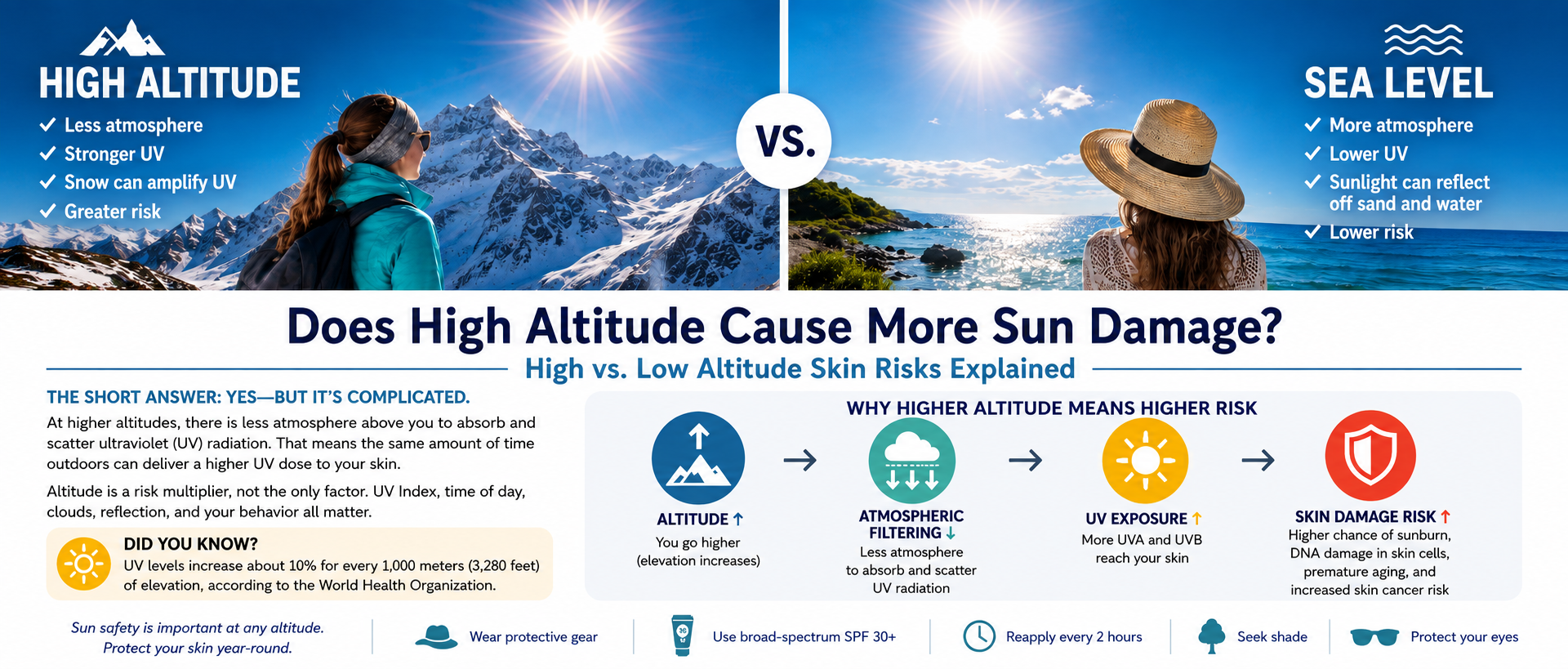
For anyone who works a full shift outdoors, the back of the bottle matters more than the marketing on the front.
A bottle can shout SPORT, ACTIVE, or SPF 50 in giant letters and still fall short on a roof, a road crew, or a job site.
You sweat. You wipe your face. Dust sticks to your skin. Wind cuts across the site. PPE rubs against your arms and neck. And your sun exposure keeps going, shift after shift.
That changes what makes a sunscreen right for you.
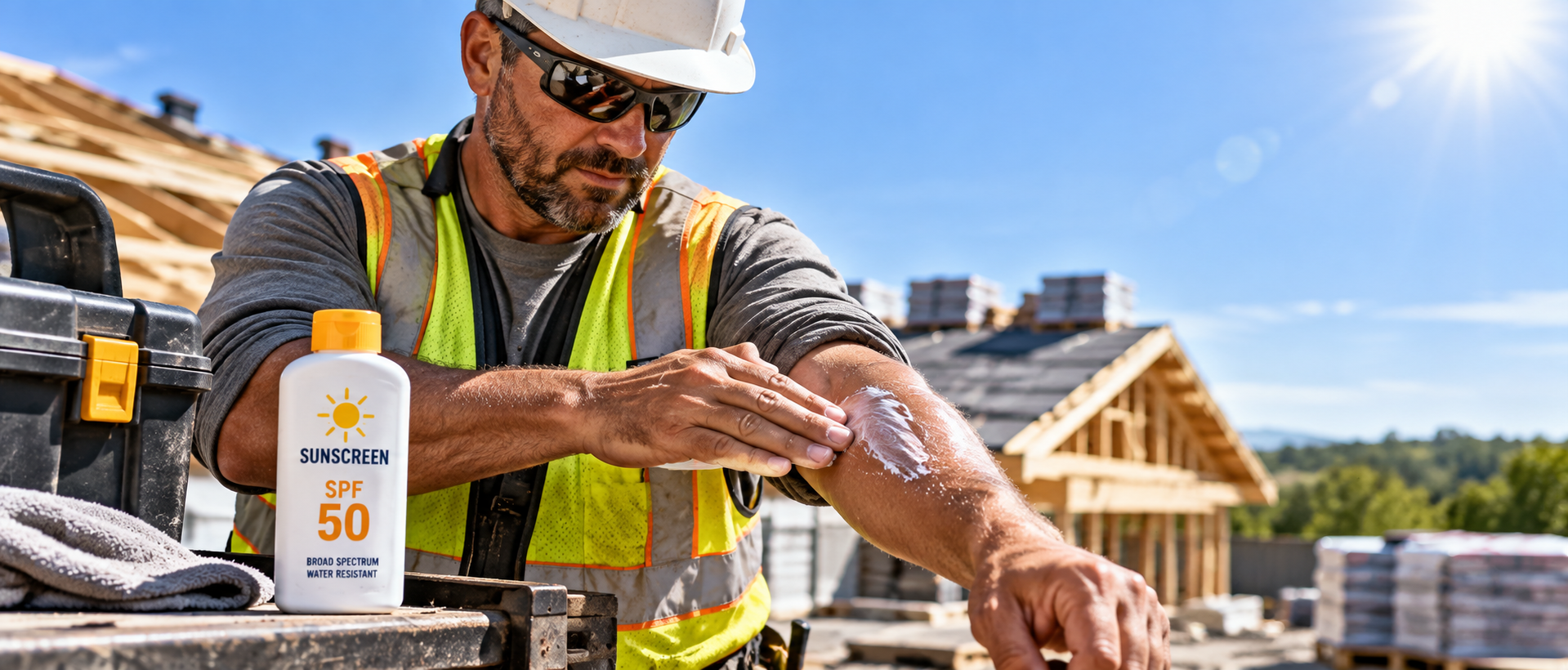
Dermatologists judge the label, not the brand
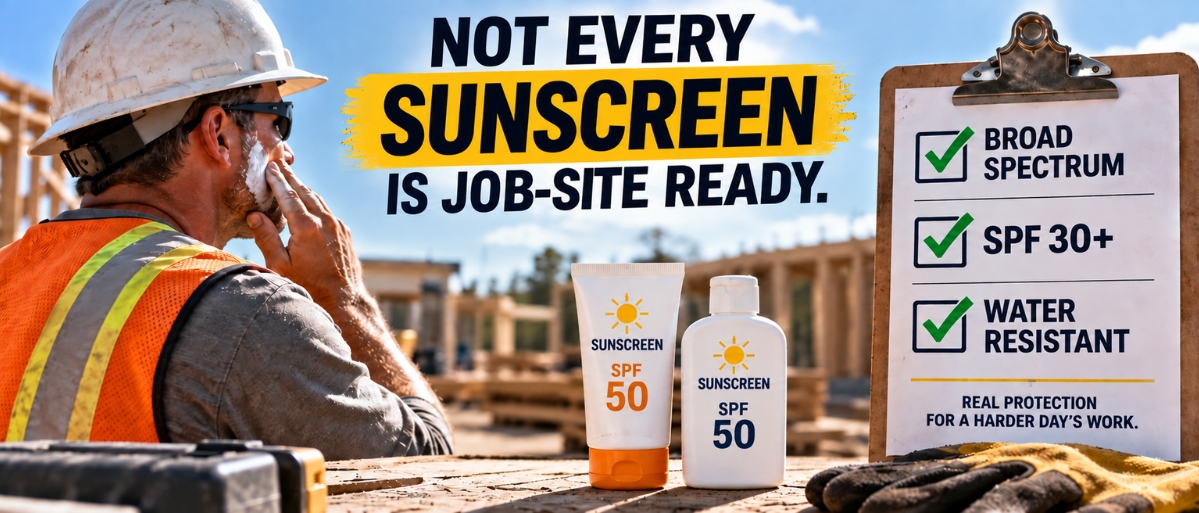
There is no dermatologist blacklist of sunscreen brands for outdoor workers. The American Academy of Dermatology (AAD) points you to three things on the label: broad spectrum, SPF 30 or higher, and water resistant.
Broad spectrum means protection from both UVA and UVB rays. Water resistant means the sunscreen holds its SPF for 40 or 80 minutes while you sweat or swim. Those three checks tell you far more than the word Sport ever will.
At a glance
| Watch out for | Look for instead |
|---|---|
| SPF under 30 for long shifts | SPF 30 to 50 or higher |
| A big SPF number by itself | A broad-spectrum label (UVA and UVB) |
| No water-resistance claim | 40- or 80-minute water resistance |
| Spray as your only coat in wind | Lotion first, a stick for small spots |
| Fragrance on already-irritated skin | Fragrance-free, mineral if you react |
| A Sport badge as proof | The three claims on the back label |
Start at SPF 30 or higher
The National Institute for Occupational Safety and Health (NIOSH) sets SPF 15 as the floor for outdoor workers. The AAD sets the bar higher at SPF 30 for long stretches of sun. SPF 30 filters about 97% of UVB rays when you apply it well. No sunscreen blocks 100%.
Here is the catch for job sites: sunscreen rarely gets used the way it is tested. It sweats off. It rubs off. Spots get missed. Reapplication runs late. Most people apply less than the lab amount, so real protection lands lower than the number on the bottle.
Job-site rule: start at SPF 30 or higher, then focus on applying enough and reapplying on time.
Look for the words broad spectrum
A big SPF number covers UVB, the rays behind sunburn. Your skin also needs UVA protection. NIOSH explains that UVA reaches past the top layer of skin, damages connective tissue, and raises skin cancer risk. Broad spectrum covers both.
So ask one question at the shelf: is it broad spectrum and SPF 30 or higher?
Match water resistance to how much you sweat
Picture two people in SPF 50. One sits outside at lunch. The other frames a house in July. Same label, very different day.
Sweat breaks sunscreen down. NIOSH lists perspiration as one of the things that cut sunscreen performance, along with wind, humidity, and how you apply it. For heavy-sweat work, choose 80-minute water resistance where you can.
One caution worth repeating: water resistant means water resistant, not all-day. It holds up better while you sweat. It still needs a fresh coat. Reapply at least every two hours, and sooner after heavy sweating.
Use spray with care, or reach for lotion first
Spray feels fast. Grab the can, hit your arms and neck, get to work. Speed hides a problem: did enough reach your skin?
The AAD says the hard part of spray is knowing you applied enough. Their fix is to spray until your skin glistens, then rub it in. They also warn against breathing it in.
Now add a job site. Wind carries the mist away. You rush. You reach for your own neck and shoulders. A quick pass can feel like coverage when it is thin. The FDA also flags spray for flammability and inhalation, and points out that many sprays contain alcohol, so keep them clear of open flames and ignition sources.
A steadier plan: use a water-resistant lotion for your main coat, especially before the shift. Keep a stick for the nose and ears, applied heavy. Prefer spray? Follow the label, use plenty, rub it in, and aim it away from your face.
Read the label before the Sport badge
Words like SPORT, ACTIVE, PERFORMANCE, and ULTRA make a bottle sound built for outdoor work. The FDA has never defined Sport for sunscreen. Turn the bottle around and read the three claims that carry weight: broad spectrum, SPF 30 or higher, water resistance.
There is a second reason to check. Consumer Reports tested 130 sunscreens in 2026 and found most averaged below their labeled SPF in its lab, including some with sporty branding. CR notes its method differs from the FDA’s, so treat a below-label result as a shopping caution. The takeaway: two SPF 50s can perform very differently, so pick with care and apply generously.
Give sensitive or irritated skin the right formula
Outdoor skin takes a beating from sweat, friction, dust, heat, PPE, repeated washing, and job-site irritants. If sunscreen keeps stinging, the fix is often a different formula.
The AAD suggests people with sensitive or allergy-prone skin favor fragrance-free, oxybenzone-free formulas and reach for mineral options with zinc oxide or titanium dioxide. Mineral, chemical, and hybrid formulas can all protect well. The useful question is which one guards your skin and feels good enough to wear all day. If a product brings on burning, itching, redness, or a rash, switch products and check with a dermatologist.
Read recalls in context
Plenty of online posts tell you to swear off whole brands. Look closer. Certain lots of Coppertone aerosol sprays were recalled in 2021 after benzene turned up. Certain lots of Banana Boat Hair & Scalp SPF 30 spray were recalled in 2022 and 2023 for the same reason. Those recalls covered specific lots, not every product from those companies, and the FDA has since marked them completed. So check current labels and lot codes before you judge a whole brand.
A 2026 FDA update worth knowing
On September 10, 2026, the FDA finalized an order removing two older ingredients, PABA and trolamine salicylate, from the over-the-counter sunscreen rules after deciding their risks outweighed their benefits. Good news for workers: the FDA says it is not aware of any sunscreen sold in the U.S. today that still contains them, so there is nothing on your shelf to check.
The Job-Site Sunscreen Checklist
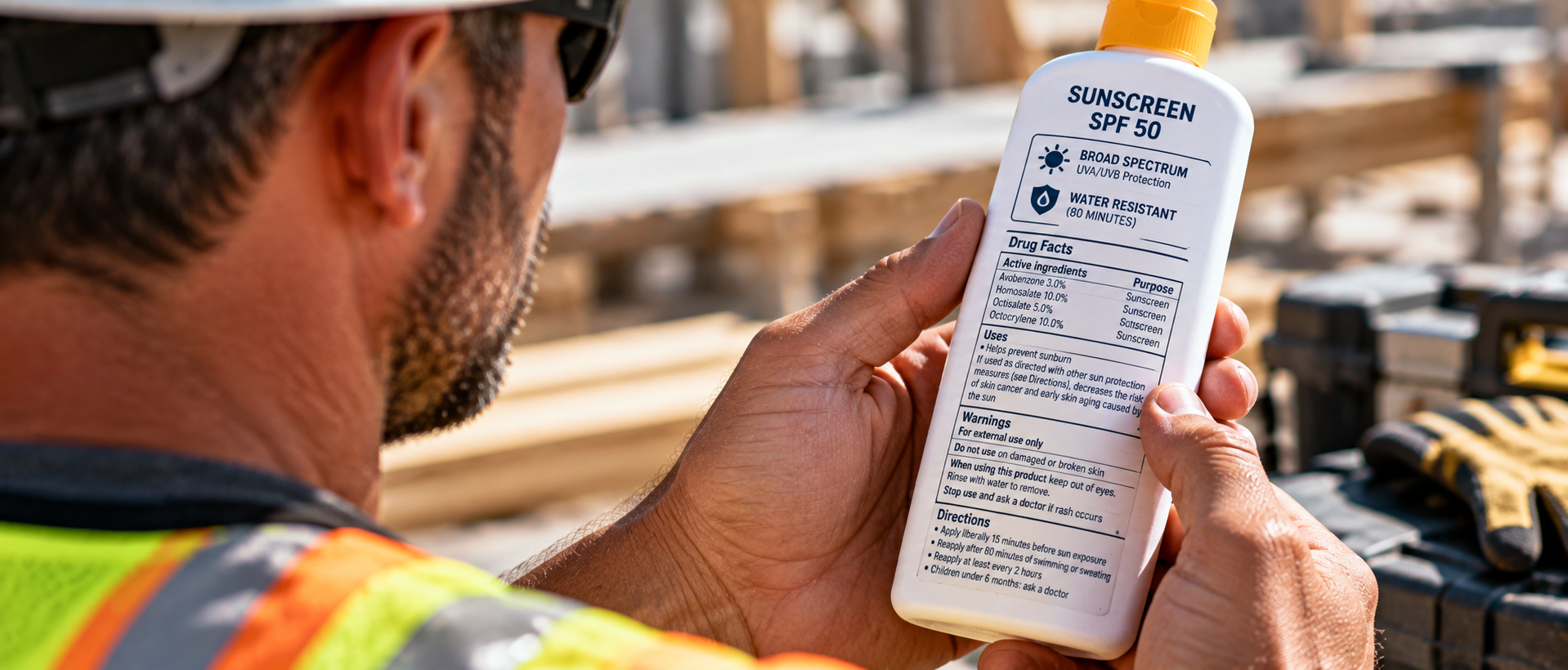
Turn the bottle around and look for:
- Broad spectrum, covering UVA and UVB
- SPF 30 to 50 or higher
- 80-minute water resistance for heavy sweat
- Lotion for the main coat, a stick for small spots, especially in wind
- Fragrance-free if your skin runs sensitive
- A feel comfortable enough that you apply it generously
- A price low enough that you reapply without thinking twice
A Mary Kay pick that meets the whole checklist
Want one bottle that ticks every box? Mary Kay® Sunscreen Broad Spectrum SPF 50 fits the job.
- Guards against UVA and UVB at SPF 50, so you start high on the dial.
- Holds up for 80 minutes of water resistance while you sweat and work, made for active days outdoors.
- Suits sensitive skin, absorbs fast, and leaves no white cast, so it wears well under a hard hat and safety glasses.
- Dermatologist-tested and non-comedogenic, so it plays nice with skin that already takes a beating on the job.
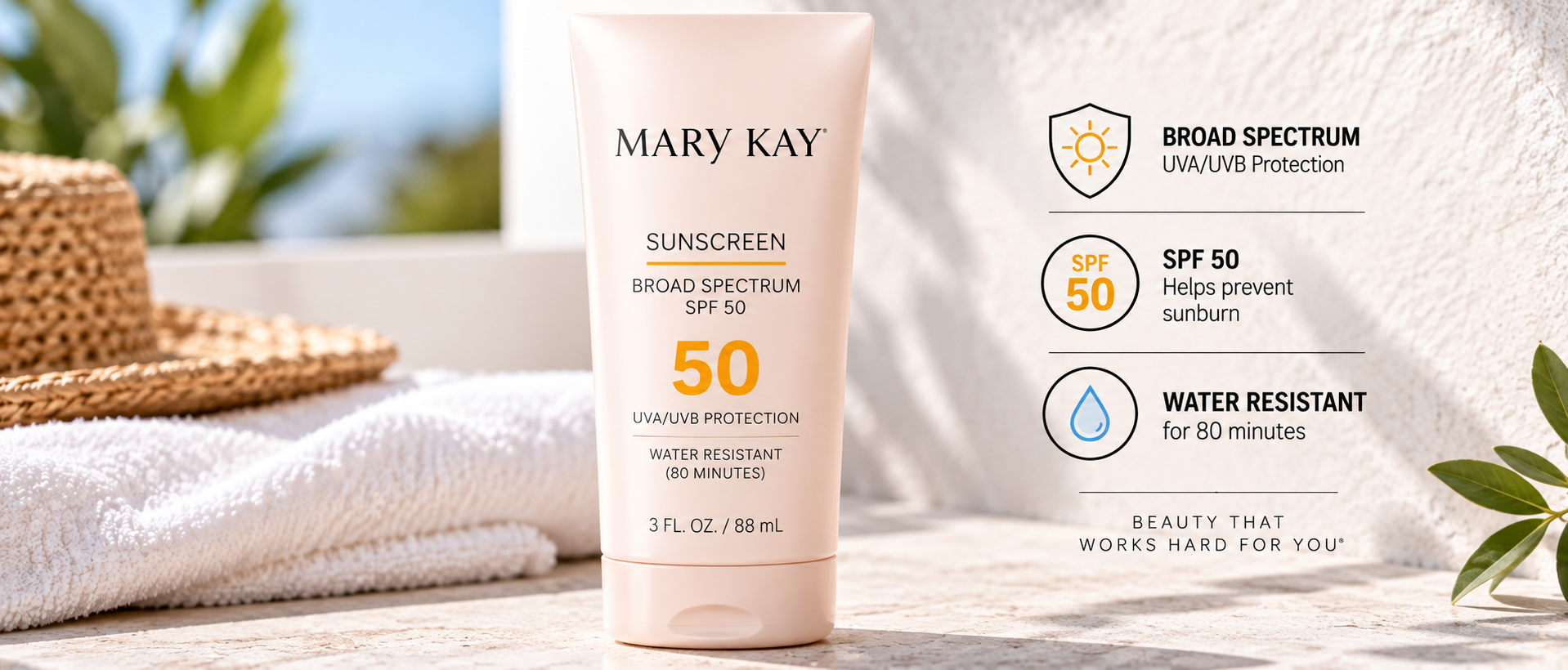
Smooth it on about 15 minutes before you head out, cover the easy-to-miss spots, and reapply every two hours or after heavy sweating.
How much to use, and where
Even a great sunscreen falls short when you skimp. The AAD says most adults need about one ounce, a shot glass full, to cover exposed skin. Wearing pants, boots, and sleeves? You need less, so focus on what shows.
Hit the spots workers miss most, which NIOSH calls out by name: ears, scalp, lips, neck, tops of the feet, and the backs of your hands. Then do the part people forget: reapply. Every two hours, and after heavy sweat.
Think of it as a loop: apply, work, sweat, reapply, keep protecting.
Cloudy days still count
Gray skies still send UV your way. NIOSH warns that outdoor workers get exposed even when the sky looks dull. Sun protection works best as a habit rather than a reaction to how bright it looks. Boots, gloves, eye protection, required PPE, sunscreen. Same list, every shift.
Build sunscreen into a bigger plan
Even SPF 50 is one layer of protection, so build the rest around it. The AAD and NIOSH both say to stack your defenses: shade on breaks, a wide-brim hat where your PPE allows, UV-blocking eyewear, tightly woven or UV-rated sleeves, and smart scheduling around peak sun.
Job safety rules come first. A sun hat never replaces a required hard hat, and clothing never gets in the way of required gear. The rule of thumb: cover what you can, sunscreen what you cannot.
The bottom line
Outdoor workers rarely need a special brand. The real target is sunscreen built for the way you work: broad spectrum, water resistant, SPF 30 or higher, in a formula you will apply well and often. Pair it with shade, clothing, eyewear, and head protection, and you cut how much of your defense rests on one perfect coat.
Let’s match the right sun protection to your shifts
As your Mary Kay Independent Beauty Consultant, I can walk you through options like the Broad Spectrum SPF 50 and set you up with a routine that holds up on the job. Reach out today and let’s keep your skin covered, every shift, all season.

Sources
- American Academy of Dermatology (aad.org): sunscreen selection, labels, spray use, sensitive skin
- NIOSH / CDC (cdc.gov): sun exposure guidance for outdoor workers
- U.S. Food and Drug Administration (fda.gov): sunscreen safety, spray flammability, September 10, 2026 final order
- Consumer Reports (consumerreports.org): 2026 sunscreen testing
- Mary Kay U.S. (marykay.com): product details
This content is for general education and is not medical advice or a substitute for workplace safety rules. Workers with lasting skin reactions, new or changing spots, or concerns about sun damage should see a qualified health professional. Always follow sunscreen labels and your workplace PPE and safety requirements.