Key Takeaways
- Applying skincare products in the wrong order can reduce their effectiveness by up to 50% – and trigger unnecessary irritation.
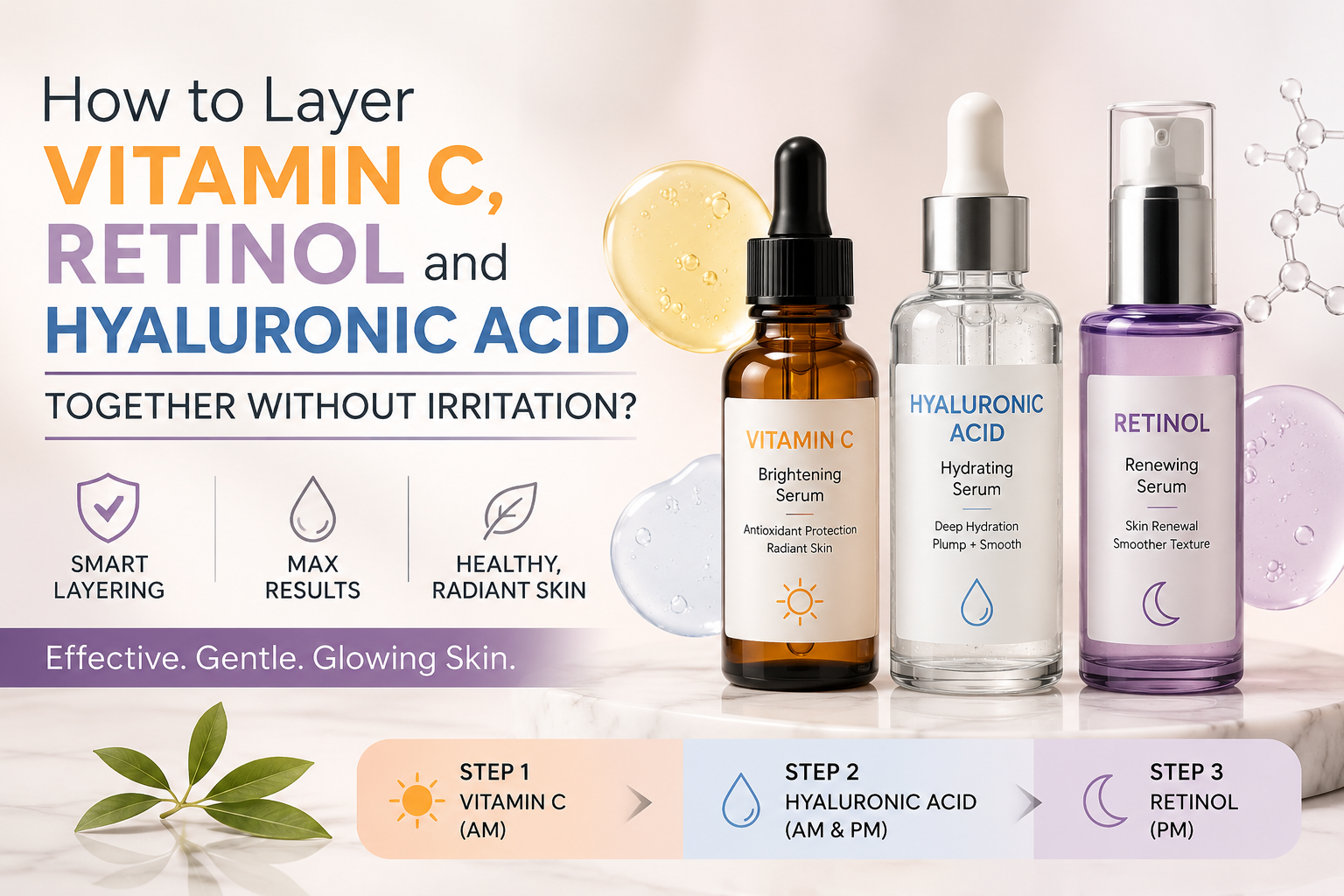
- Vitamin C belongs in the morning routine; Retinol is most effective at night. Hyaluronic Acid works in both.
- The universal layering rule – thinnest to thickest – keeps ingredients absorbing correctly and skin feeling balanced.
- Sensitive skin types can buffer Retinol irritation by applying Hyaluronic Acid first, or by alternating active ingredient days.
- Pre-formulated multi-ingredient products, like those in the Mary Kay Clinical Solutions collection, take the guesswork out of layering actives safely – a useful option worth knowing about.
Wrong Order Significantly Hinders Absorption and Results
There’s a real cost to skipping order. Improper layering of skincare products can reduce their effectiveness by up to 50% – and that’s before factoring in irritation. When a heavier product goes on first, it creates a barrier that prevents lighter, more active serums from penetrating the skin. The result: less brightening, less renewal, less hydration, and potentially more redness than expected.
Layering Vitamin C, Retinol, and Hyaluronic Acid correctly isn’t complicated. It requires understanding what each ingredient does, when it works best, and in what order to apply it. Get those three things right, and this trio becomes one of the most powerful combinations in any skincare routine.
What Each Ingredient Actually Does
Before getting into application order, it helps to know what each ingredient brings to the skin – because their individual roles directly inform when and how they’re used.
Vitamin C: Morning Antioxidant Shield
Vitamin C is a potent antioxidant that neutralizes free radicals from UV exposure and environmental pollution. It also plays a key role in brightening uneven skin tone and supporting collagen production. Sunlight can destabilize Vitamin C and reduce its potency, so morning application makes the most sense – it works alongside the day’s environmental stressors rather than against them.
Retinol: Nighttime Cell Renewal
Retinol is a Vitamin A derivative that accelerates cell turnover, smooths fine lines, and improves skin texture over time. Evening use is best for two reasons: it increases photosensitivity, making skin more vulnerable to sun damage, and it works most efficiently without UV light exposure. Think of it as the overnight renovation crew – most effective when the skin is at rest.
Hyaluronic Acid: All-Day Hydration Buffer
Hyaluronic Acid (HA) is a humectant that draws moisture into the skin and holds it there. Unlike Vitamin C or Retinol, it has no preferred time of day – it earns its place in both the morning and evening routine. Its most critical role in a multi-active routine is acting as a buffer, softening the potential dryness and irritation that Retinol can cause.
The Golden Rule: Thinnest to Thickest
Every skincare routine follows one fundamental principle: apply products from the thinnest consistency to the thickest. Lightweight serums go on before heavier creams and oils because skin can only absorb what reaches it. A thick moisturizer applied before a serum essentially blocks the serum from penetrating at all.
In practical terms, water-based serums (like Vitamin C or Hyaluronic Acid) always come before moisturizers, and moisturizers always come before oils or SPF. That single rule resolves most layering confusion before it starts.
Your Morning Routine Order
The morning routine centers on protection and hydration – setting the skin up to handle sun, pollution, and stress throughout the day.
Vitamin C First on Clean, Dry Skin
After cleansing, apply Vitamin C serum directly to clean, dry skin – this step shouldn’t be rushed. Skin should be fully dry (not just damp) before application. Vitamin C works best at a low pH, and applying it to damp skin can dilute its concentration and reduce efficacy. Let it absorb for 30-60 seconds before moving on.
The morning sequence looks like this:
- Cleanser
- Vitamin C serum (on clean, dry skin – wait 30-60 seconds)
- Hyaluronic Acid serum
- Moisturizer (to seal in the HA)
- SPF (non-negotiable when using Vitamin C)
Follow Hyaluronic Acid With a Moisturizer to Lock In Hydration
Hyaluronic Acid needs to be sealed in – this is one of the most commonly missed steps. Applied without a moisturizer on top, HA can actually pull moisture from the deeper layers of skin in dry air, leaving skin feeling tighter than before. Always follow with a moisturizer to trap the hydration in place.
Your Evening Routine Order
The evening routine is where Retinol does its work. Because Retinol increases skin sensitivity, the goal is to apply it strategically – and to give it the buffer it needs to work without causing irritation.
Sensitive Skin: Use Hyaluronic Acid First as a Retinol Buffer
For most skin types, Retinol goes on after cleansing (and toning, if used). For dry or sensitive skin, applying Hyaluronic Acid before Retinol – sometimes called the “sandwich method” – can significantly improve comfort. The light layer of moisture makes skin more resilient, so Retinol encounters a better-prepared surface rather than a dry, reactive one.
The evening sequence looks like this:
- Cleanser
- Hyaluronic Acid serum (optional buffer step for sensitive skin – let it dry fully before continuing)
- Retinol (wait 5-10 minutes after HA has dried completely)
- Moisturizer
Wait Before Layering Active Ingredients
Timing between steps materially changes how ingredients perform. Lightweight layers need 30-60 seconds to absorb; active ingredients like Retinol need 5-10 minutes. Applying moisturizer too soon after Retinol can dilute it. Applying Retinol over still-damp HA can cause increased redness and dryness. A little patience here goes a long way.
Sensitive Skin? Adjust the Strategy
Layering multiple actives in one routine isn’t right for everyone – and pushing through irritation is never the right move. Skin that’s already reactive needs a more gradual approach.
Alternate Active Ingredient Days
Instead of using Vitamin C every morning and Retinol every night, consider alternating days. Vitamin C on Monday, Wednesday, Friday. Retinol on Tuesday, Thursday. Hyaluronic Acid every day, both AM and PM. This gives skin time to recover between actives without abandoning the routine entirely. Over several weeks, skin typically builds tolerance and frequency can be increased.
Signs You’re Overdoing It
Over-exfoliation or over-activation can sneak up gradually. Watch for these signals:
- Persistent redness that doesn’t calm down after a few hours
- Stinging or burning when applying water-based products (like toner or HA)
- Flaking or peeling that isn’t the normal Retinol adjustment phase in early use
- Increased sensitivity to sunlight or wind
Any of these signs call for a pause – scale back to basics (cleanser, moisturizer, SPF) until skin recovers, then reintroduce actives one at a time.
Simplify With Pre-Formulated Multi-Ingredient Products
For anyone who finds multi-step layering overwhelming, pre-formulated products offer a practical alternative. Some skincare lines have developed formulas that combine key actives – already tested for compatibility, stability, and appropriate pH – into a single product that removes the guesswork entirely.
The Mary Kay Clinical Solutions collection is one example worth considering. It includes targeted formulas like the Mary Kay Clinical Solutions® HA + Ceramide Hydrator and the Mary Kay Clinical Solutions® Retinol 0.3, each designed to deliver clinical-level results with reduced risk of the layering errors that commonly cause irritation. Pre-formulated products like these go through rigorous testing to ensure the actives work together – a meaningful advantage for anyone new to ingredient-forward skincare.
Layered Correctly, These Three Ingredients Transform Skin
Vitamin C, Retinol, and Hyaluronic Acid are often misunderstood – not inherently complicated. Used in the right order, at the right time of day, with adequate wait time between steps, this trio addresses some of the most common skin concerns simultaneously: uneven tone, fine lines, dullness, and dehydration. The irritation people commonly associate with this combination usually comes down to order and timing, not the ingredients themselves.
Start slow, stay consistent, and let the skin adapt. Within a few weeks of a properly layered routine, the difference becomes visible – and the process becomes second nature.
For more skincare guidance and product recommendations built around active ingredients, visit MI Essential Skincare– a resource dedicated to helping readers build smarter, more effective skincare routines.