Key Takeaways
- UV radiation can compromise the skin barrier even without a visible sunburn – dryness, sensitivity, and stinging are early warning signs.
- The skin barrier is a lipid-rich “brick wall” structure, and once damaged, it needs key lipids like ceramides, cholesterol, and fatty acids to truly rebuild its structure, along with humectants like hyaluronic acid for hydration and antioxidants for protection and repair support.
- Simplifying your skincare routine is the first and most important step in recovery; active ingredients like retinoids can make things worse during healing.
- Mild barrier damage may resolve in days to a few weeks, but severe cases can take several months of consistent, gentle care.
- MarketInformatycs (MI) outlines a practical, step-by-step recovery framework for anyone dealing with sun-damaged or environmentally compromised skin.
Spending a long day outdoors – even a cloudy one – can leave skin feeling tight, raw, and reactive for days afterward. That is not just dehydration. In many cases, it is a compromised skin barrier, and recovering from it takes more than a soothing aloe gel and a good night’s sleep.
Sun Damage Doesn’t Need a Sunburn
Most people associate sun damage with a visible, painful burn. But ultraviolet (UV) radiation causes measurable harm to skin structure well before redness ever appears. Lipids break down, proteins oxidize, and the cellular “glue” holding skin cells together begins to weaken – all quietly, beneath the surface.
This kind of invisible overexposure is easy to miss precisely because there is no obvious alarm. Instead, skin starts behaving strangely over the following days: it feels tight after washing, stings when moisturizer is applied, or suddenly reacts to products that were never a problem before. Understanding why this happens starts with understanding what the skin barrier actually does. For a deeper look at building and maintaining a resilient barrier, this skin care essentials resource covers the foundational principles in practical detail.
What Your Skin Barrier Actually Does
The skin barrier – technically the stratum corneum – is the outermost layer of skin. Its job is deceptively simple: keep moisture in and keep pathogens, pollutants, and UV-generated free radicals out. When it is working properly, skin feels soft, balanced, and resilient. When it is not, everything feels harder.
The ‘Brick Wall’ Structure
A useful way to picture the skin barrier is as a brick wall. The “bricks” are tough, flattened skin cells called corneocytes. The “mortar” binding them together is a precisely mixed lipid matrix – ceramides, cholesterol, and fatty acids in a specific ratio. Each component plays a structural role. Ceramides make up the largest portion and are essential for water retention and defense. Cholesterol keeps the matrix fluid and flexible. Fatty acids fill in the gaps. Disrupt any part of this system and the whole wall starts to crack.
Why UV Is a Major Threat to Barrier Integrity
UV radiation attacks the mortar, not just the surface. It degrades corneodesmosomes – the specialized protein structures that anchor skin cells together in the stratum corneum. As these protein anchors break down, the barrier loses cohesion, and transepidermal water loss (TEWL) increases measurably. Skin literally starts leaking moisture. Beyond cellular structure, UV also generates free radicals that oxidize lipids and proteins, compounding the breakdown. Research published in the Journal of Drugs in Dermatology and other studies indicate that ceramide-containing formulations, including moisturizers, can support skin barrier function and help protect against various forms of degradation, including those induced by UV radiation.
Signs Your Barrier Is Damaged
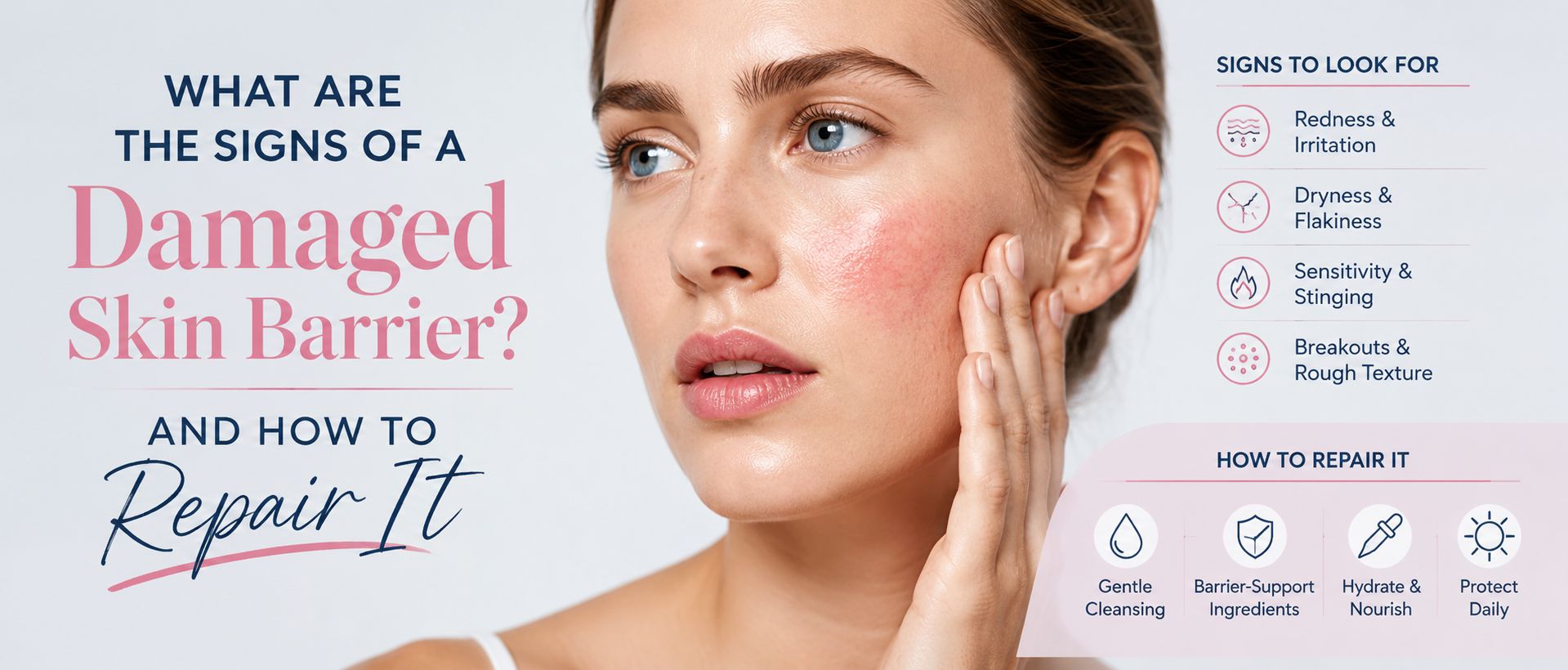
Barrier damage rarely announces itself with a single dramatic symptom. It tends to show up as a cluster of skin complaints that feel unrelated but share a common root.
Persistent Dryness, Tightness and Flaking
When the lipid matrix is compromised, moisture escapes faster than skin can retain it. The result is dryness that does not respond to standard moisturizers, a tight or “papery” sensation after cleansing, and visible flaking – especially around the cheeks, nose, and forehead. This is elevated TEWL in action.
Redness, Itching and Stinging
A weakened barrier lets environmental irritants penetrate more deeply, triggering an inflammatory response. That shows up as persistent low-grade redness, an itching or burning feeling, and stinging sensations – particularly when applying water, toner, or even a gentle moisturizer. A weakened barrier can lead to increased reactivity and inflammation, which may manifest as persistent redness, itching, or burning. In cases of sun exposure, UV-triggered damage can activate the immune system, contributing to these inflammatory responses.
Sudden Product Sensitivity and Breakouts
One of the more confusing signs: products used for months without issue suddenly cause irritation. This happens because the barrier is no longer filtering ingredients effectively – even mild actives reach deeper layers of skin than they should. Along the same lines, unexpected breakouts can occur as bacteria and other aggressors slip past a compromised defense.
Simplify Before You Repair
The instinct when skin looks and feels bad is often to add more – more serums, more targeted treatments, more layers. That instinct will make things worse. A damaged barrier needs calm, not stimulation.
What to Pause Immediately
Dermatologists consistently recommend stripping the routine back to three steps while the barrier is healing: a gentle, fragrance-free cleanser; a rich, occlusive moisturizer; and broad-spectrum SPF 30 or higher, every morning. Everything else should be paused, particularly:
- Retinoids and retinol – accelerate cell turnover and increase sensitivity
- Exfoliating acids (AHAs, BHAs, PHAs) – remove what remains of the compromised surface layer
- Vitamin C serums at high concentrations – can sting and irritate inflamed skin
- Physical scrubs – disrupt the fragile stratum corneum further
- Alcohol-heavy toners or astringents – strip remaining lipids
This is a reset window – typically one to four weeks depending on severity – before actives can be reintroduced gradually.
Ingredients That Actually Rebuild
Once the routine is simplified, the focus shifts to what goes in to the remaining products. Not all moisturizers are equal for barrier repair.
Ceramides, Cholesterol and Fatty Acids
These three lipids are the literal building blocks of the barrier’s mortar layer. Products formulated with all three – ideally in a physiologic ratio – have the best chance of directly replenishing what UV and environmental stress have broken down. Look for ceramide NP, AP, and EOP on ingredient lists, paired with cholesterol and linoleic or oleic acid. Clinical data supports that ceramide-containing formulations reduce TEWL and improve barrier function with consistent use.
Humectants: Hyaluronic Acid and Glycerin
Ceramides rebuild the wall; humectants fill it with water. Hyaluronic acid can hold up to 1,000 times its weight in moisture and works best when applied to slightly damp skin. Glycerin draws moisture from the environment and deeper skin layers toward the surface, where TEWL is highest. Both are well-tolerated even on the most reactive skin.
Antioxidants: Vitamins C and E
UV exposure floods skin with free radicals that continue damaging lipids and proteins even after sun exposure ends. Antioxidants neutralize these free radicals, slowing ongoing damage and supporting the skin’s own repair mechanisms. Vitamin C also plays a role in collagen synthesis, contributing to structural recovery over time. Vitamin E works synergistically with C – the two together are significantly more effective than either alone. During active barrier damage, opt for gentler, lower-concentration vitamin C formats (like ascorbyl glucoside) rather than pure L-ascorbic acid, which can sting compromised skin.
Recovery Takes Longer Than You Think
One of the most common mistakes in barrier recovery is abandoning the process too early – or reintroducing actives the moment skin looks better. Looking better and being fully repaired are not the same thing.
Mild to Moderate: Days to a Few Weeks
Surface-level overexposure – a day at the beach, a few hours of unprotected outdoor time – typically causes barrier disruption that resolves within days to two weeks with the right routine. Redness fades, sensitivity decreases, and skin returns to a normal baseline relatively quickly, especially in younger skin with a higher cellular turnover rate.
Severe Damage: Months of Consistent Care
More significant or repeated damage tells a different story. Research indicates that a full barrier reset – particularly one involving lipid bilayer disruption from aggressive cleansing or chronic UV overexposure – can take approximately three months of consistent gentle care. In severe cases, barrier damage can lead to persistent burning and ongoing reactivity for extended periods, requiring consistent, gentle care for several months for resolution. Recovery in those situations came from a strict minimalist routine: a gentle cleanser, a barrier-focused cream, patience, and in some cases medical support. Trying to rush the process by reintroducing actives prematurely reliably extends the timeline.
Protect the Barrier You Just Rebuilt
Recovery without prevention is a cycle. Once the barrier has been restored, protecting it consistently becomes non-negotiable. Daily broad-spectrum sunscreen – SPF 30 minimum, SPF 50 preferred – is the single most impactful step. UV is present year-round, regardless of season or cloud cover, and remains the dominant environmental threat to barrier integrity.
Beyond sun protection, a few habits make a measurable difference in long-term barrier health: using lukewarm water when cleansing, patting skin dry instead of rubbing, moisturizing within a minute of washing while skin is still slightly damp, and reintroducing actives slowly and one at a time after recovery. Environmental stressors beyond UV – extreme cold, indoor heating, pollution, and even prolonged psychological stress – can also erode barrier function over time, so a consistently nourishing routine matters across all seasons, not just summer.
For evidence-based skincare guidance and curated product recommendations tailored to barrier health and repair, visit MI Skin Care Essentials – a trusted resource for cutting through skincare noise with science-backed, practical advice – or the MI Essential Skin Care Blog.