Key Takeaways
- Morning routines should focus on protection – antioxidants and SPF are non-negotiable steps.
- Retinol belongs exclusively at night, when the skin’s natural repair cycle amplifies its collagen-boosting effects.
- UV exposure is responsible for up to 80-90% of visible skin aging – daily broad-spectrum SPF 30+ is the most effective way to prevent that damage.
- Hyaluronic acid and eye cream work well in both AM and PM routines.
- The order and timing of product application matters as much as the products themselves – keep reading to see exactly where each step fits.
Most people own the right products. The problem is timing. Using retinol in the morning, or relying on vitamin C at night instead of the morning, can reduce how well those products work – and in the case of retinol, cause real irritation. Here is a clear, step-by-step breakdown of what goes on when, and why it makes a real difference.
Timing Your Skincare Changes Everything
Skin does not behave the same way at 8 AM as it does at 11 PM. During the day, it is in defense mode – exposed to UV rays, pollution, and environmental stressors that accelerate aging. At night, it shifts into repair mode, rebuilding collagen and regenerating cells while the body rests.
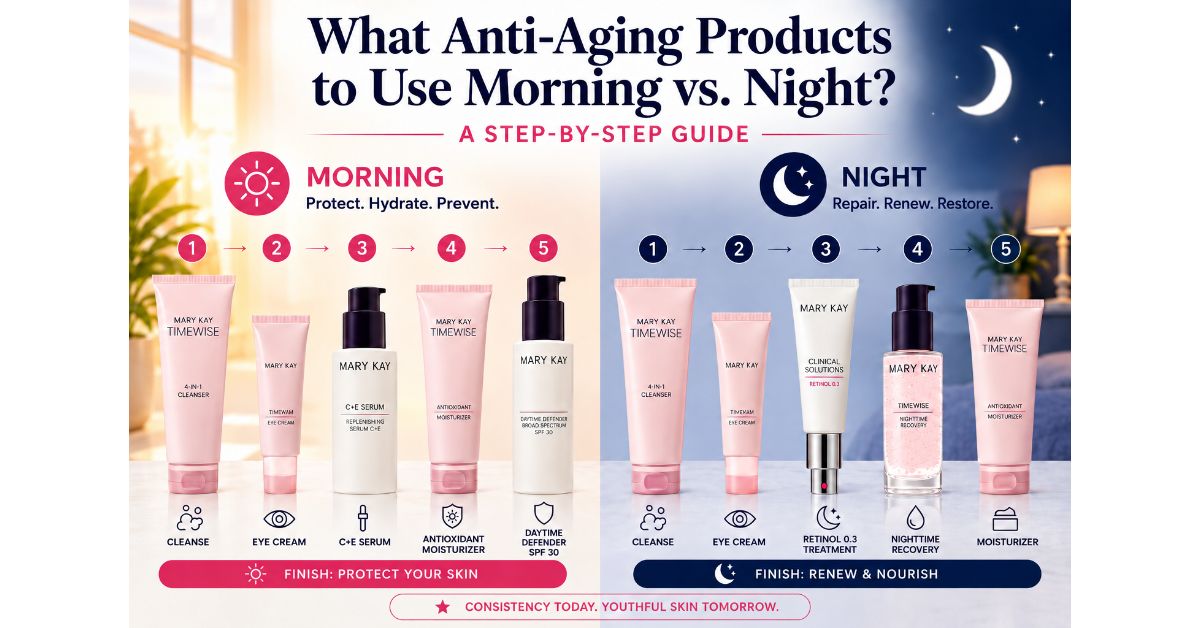
A smart anti-aging routine works with that biology. That means matching each product to the phase of the day where it performs best. The Mary Kay TimeWise collection is designed around this principle, pairing targeted daytime defense with overnight repair in one cohesive system.
Morning: Protect and Defend
The essential AM routine has one primary goal: shield the skin from the damage that drives visible aging. Every product chosen in the morning should serve that mission.
Gentle Cleanser First
Start with a gentle, non-stripping cleanser. Overnight, skin produces sebum and sheds dead cells – a light cleanse clears the slate without disrupting the moisture barrier. Harsh cleansers at this step can leave skin reactive and less able to absorb what follows.
Vitamin C Serum for Antioxidant Defense
Vitamin C is the workhorse of the morning routine. Applied after cleansing, a vitamin C serum neutralizes free radicals from UV exposure and environmental pollution – two of the leading causes of premature skin aging. Applied in the morning, it also boosts the effectiveness of sunscreen on top, making the combination more powerful than either product alone. Look for a stabilized L-ascorbic acid formula and apply it to clean, dry skin before moisturizer.
Moisturizer to Lock In Hydration
A lightweight moisturizer seals in the serum beneath it and keeps the skin barrier intact throughout the day. Look for a non-comedogenic formula that absorbs quickly – heavy creams in the morning can interfere with sunscreen application and finish. A moisturizer that includes hyaluronic acid is a strong choice (more on that shortly).
Sunscreen: The #1 Anti-Aging Step
If only one product could be used every morning, it should be sunscreen. UV exposure is responsible for up to 80-90% of visible skin aging, including wrinkles, dark spots, and loss of elasticity – and daily broad-spectrum SPF 30 or higher is the most effective way to prevent that damage. Apply it as the final step every morning, regardless of the season or cloud cover. UV rays penetrate clouds and windows.
Night: Repair and Renew
Nighttime is when the skin does its heaviest lifting. Cell turnover accelerates, collagen production increases, and the skin is far more receptive to active ingredients. The PM routine should take full advantage of that window.
Double Cleanse to Reset Skin
At night, cleansing matters more. Throughout the day, sunscreen, makeup, pollution, and excess oil accumulate on the skin’s surface. A double cleanse – first an oil-based cleanser to break down SPF and makeup, followed by a water-based cleanser – ensures that actives applied afterward can actually penetrate, rather than sit on top of residue.
Retinol: Why Nighttime Is Optimal for Anti-Aging Benefits
Retinol is one of the most well-researched anti-aging ingredients available, but it has a critical limitation: it is photosensitive. UV light degrades retinol, stripping it of its potency before it can do any work. That alone makes nighttime application the right call.
The timing advantage goes deeper than protection from light. Retinol accelerates cell turnover and stimulates collagen production – both processes that align naturally with the skin’s overnight repair cycle. Applying retinol at night means it works in sync with the skin’s own biology. Start with a lower concentration (0.1%-0.3%) a few nights per week and build tolerance gradually.
Note: If you use an eye cream at night, apply the eye cream before you apply retinol, and keep retinol away from the skin around the eyes.
Nighttime Recovery Cream and/or Moisturizer
At night, a richer, more occlusive moisturizer or a dedicated night cream supports the repair process by preventing transepidermal water loss while the skin regenerates. Many night creams also contain peptides or collagen-boosting ingredients that are most effective during this natural repair window. Apply as the final step after retinol has had a moment to absorb.
Ingredients That Work Both AM and PM
Not every ingredient needs to be strictly scheduled. Two in particular earn their place in both routines.
Hyaluronic Acid
Hyaluronic acid is a humectant – it draws moisture into the skin from its surroundings. Use it morning and evening, applied to slightly damp skin to maximize absorption. One important note: always follow hyaluronic acid with a moisturizer. Without an occlusive layer to seal it in, hydration can escape through the skin’s surface, which is especially counterproductive on dry skin types.
Eye Cream
The skin around the eyes is thinner and more delicate than the rest of the face, making it one of the first areas to show fine lines and puffiness. Eye cream applied morning and night keeps that area consistently hydrated and protected. In the morning, look for formulas with caffeine or peptides to reduce puffiness. At night, richer formulations support overnight repair. Always apply with a gentle tap – no rubbing. A very important note: if you use an eye cream at night, apply the eye cream before you apply retinol, and keep retinol away from the skin around the eyes.
Exfoliation: Typically 1-3 Times Weekly
Exfoliation does not need to happen daily, but it does need to happen regularly. Chemical exfoliants like AHAs (alpha hydroxy acids) remove dead skin cells, improve texture, and allow other actives to penetrate more effectively. They are best used at night – AHAs increase photosensitivity, making daytime use risky without diligent SPF application. Two to three times per week is the general sweet spot; more than that can compromise the skin barrier and cause irritation.
SPF Every Morning Is Your Best Anti-Aging Investment
Daily sunscreen use is the single most evidence-backed anti-aging habit. No serum, retinol, or night cream can undo the cumulative damage of unprotected UV exposure. Broad-spectrum SPF 30 or higher, applied every morning as the last skincare step and before any makeup, is the most cost-effective and impactful addition to any routine.
Pairing SPF with a vitamin C serum in the morning creates a genuinely powerful defense system – one that addresses both immediate protection and long-term skin health at the same time.
For more skincare guidance, expert breakdowns, and product recommendations, the MarketInformatycs Essential Skincare Blog and MI Skincare Essentials webpage cover the essentials of building routines that actually work.