Key Takeaways
- Dermatologists recommend a broad-spectrum SPF 30 or higher as the daily anti-aging baseline – but broad-spectrum matters just as much as the number.
- UVA rays are the primary driver of photoaging, making broad-spectrum coverage non-negotiable for wrinkle and age-spot prevention.
- Mineral and chemical sunscreens both deliver solid anti-aging protection – the differences come down to skin type, texture preference, and ingredient sensitivities.
- Research consistently shows that daily sunscreen use slows visible skin aging more effectively than sporadic application – consistency is everything.
- Keep reading to see how mineral and chemical formulas stack up side by side, and which one might work better for your skin.
Sunscreen is the most evidence-backed anti-aging product available – full stop. Yet most people either skip it, underapply it, or get lost trying to decode labels. The SPF number, the mineral-versus-chemical debate, and the phrase “broad-spectrum” all carry real meaning for how well skin holds up over time. Breaking it all down makes the choice much simpler.
SPF 30+ Is the Anti-Aging Baseline
SPF 30 is the number dermatologists point to as the daily minimum for anti-aging protection. At SPF 30, a properly applied sunscreen filters out roughly 97% of UVB rays. SPF 50 bumps that to about 98%. The difference sounds small, but over years of daily exposure, it adds up – especially for anyone who spends extended time outdoors.
Chasing a higher SPF number alone, however, is the wrong frame. An SPF 100 sunscreen that only protects against UVB rays leaves skin almost completely vulnerable to the radiation most responsible for wrinkles and loss of elasticity. That is where broad-spectrum labeling becomes the real priority. Shoppers building an anti-aging skincare routine can find more information at Skin Care Essentials, which covers skin care options worth considering.
Why Broad-Spectrum Matters More Than SPF Alone
UVA vs. UVB: The Aging Culprit
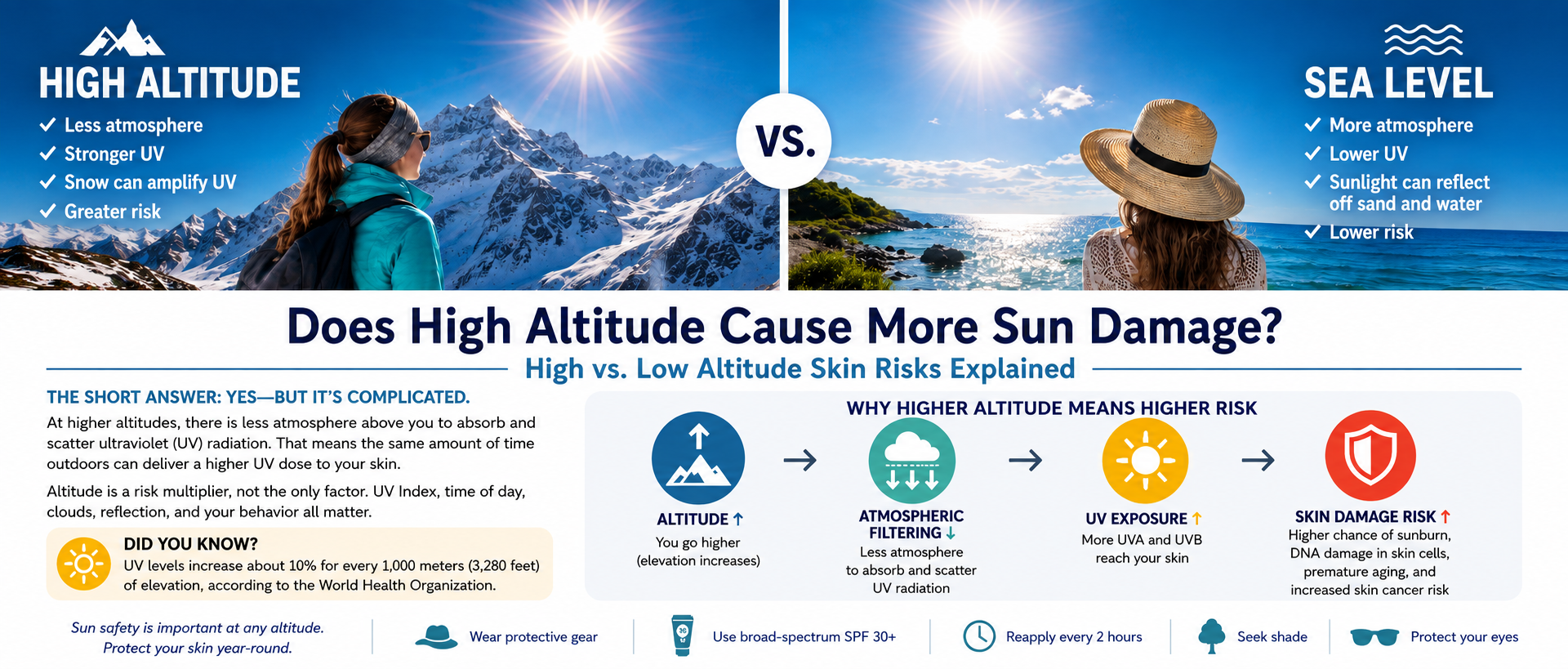
The sun emits two types of UV radiation that affect skin differently. UVB rays are shorter and more intense – they cause sunburn and contribute to skin cancer risk. UVA rays are longer, penetrate deeper into the dermis, and remain at relatively consistent levels year-round, even through clouds and glass.
UVA is the primary driver of photoaging – the breakdown of collagen and elastin that produces wrinkles, fine lines, sagging, and uneven skin tone. Because UVA damage accumulates silently without the immediate feedback of a sunburn, it is easy to underestimate. For anti-aging purposes, blocking UVA is the critical job.
What “Broad-Spectrum” Actually Means on a Label
In the U.S., the FDA requires that any sunscreen labeled “broad-spectrum” has passed a standardized test confirming protection against both UVA and UVB radiation. The SPF number itself only measures UVB protection – so a product can carry a high SPF and still offer minimal UVA defense unless it carries that broad-spectrum designation. When shopping for an anti-aging sunscreen, broad-spectrum plus SPF 30 or higher is the non-negotiable combination.
How Mineral Sunscreen Works
Mineral sunscreens use physical active ingredients – typically zinc oxide, titanium dioxide, or a combination of both – that sit on top of the skin and reflect and scatter UV rays before they can penetrate. Protection is immediate upon application, so there is no need to wait before heading outside.
Zinc Oxide: The Gold Standard Blocker
Zinc oxide is widely regarded as the most effective single sunscreen ingredient for broad-spectrum protection. It covers the full UVA spectrum – both UVA1 and UVA2 – as well as UVB, making it especially valuable for anti-aging defense. Titanium dioxide is also effective but offers slightly narrower UVA coverage, which is why many mineral formulas pair both ingredients together.
Best Skin Types for Mineral Formulas
Mineral sunscreens tend to be the go-to recommendation for:
- Sensitive skin – less likely to trigger irritation or allergic reactions
- Rosacea-prone skin – mineral filters do not generate heat on the skin the way chemical absorbers do
- Post-procedure skin – after chemical peels or laser treatments, mineral formulas are gentler
- Children’s skin – commonly preferred by pediatric dermatologists
The main trade-off is cosmetic. Mineral sunscreens, particularly those with high zinc oxide concentrations, can leave a white cast – though modern formulations with micronized particles have significantly reduced this issue.
How Chemical Sunscreen Works
Chemical sunscreens take a different approach. Rather than sitting on top of the skin, they absorb into the upper layers and work by triggering a chemical reaction when UV rays hit – converting UV radiation into heat, which the skin then releases. Because they need time to bind to skin cells, chemical sunscreens should be applied at least 15 to 20 minutes before sun exposure.
Key Active Ingredients to Know
Common active ingredients in chemical sunscreens include:
- Avobenzone – one of the few chemical filters with strong UVA1 coverage; often paired with stabilizers
- Oxybenzone – broad coverage, but one of the ingredients flagged in ongoing research around skin absorption
- Octinoxate – effective UVB filter with a lightweight texture
- Octisalate – primarily UVB protection, often used to stabilize avobenzone
Chemical sunscreens are generally thinner, blend more invisibly into the skin, and are easier to incorporate into tinted or cosmetic formulas. For people with darker skin tones who want to avoid white cast without compromising protection, a well-formulated chemical sunscreen is often the more practical choice.
Mineral vs. Chemical: Anti-Aging Compared
Protection Effectiveness
When both types are formulated to be broad-spectrum at SPF 30 or higher, neither category has a meaningful edge over the other in anti-aging outcomes. The key variable is complete, even application – both types underperform when applied too thinly or missed on areas like the ears, neck, and backs of hands.
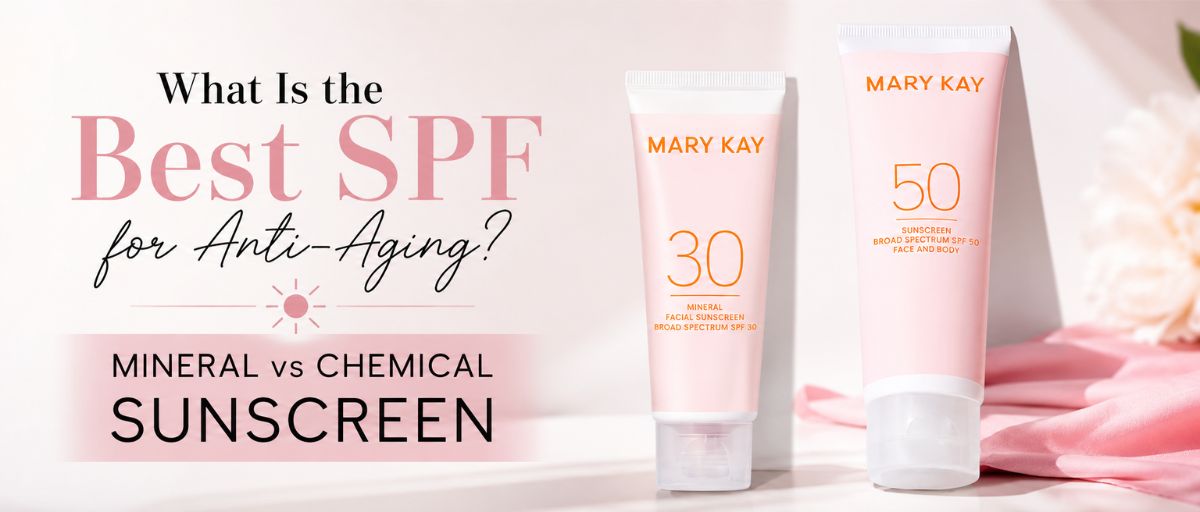
Zinc oxide-based mineral sunscreens offer particularly stable UVA1 protection without the need for additional stabilizing agents, which gives them a slight formulation advantage. Chemical filters like avobenzone are effective but can degrade in sunlight without added photostabilizers. (Product Note: Mary Kay Sunscreen Broad-Spectrum SPF 50 includes octocrylene, a photostabilizer.)
Skin Sensitivity and Safety Considerations
Some chemical sunscreen ingredients – particularly oxybenzone and octinoxate – have been the subject of ongoing research into systemic absorption. Studies have confirmed that some chemical filters can enter the bloodstream after topical use. The FDA has requested additional safety data, though no current evidence establishes that this absorption causes harm. For anyone who prefers to minimize exposure to these ingredients, mineral-based formulas or Mary Kay Sunscreen Broad-Spectrum SPF 50 offer a straightforward alternative.
(Product Note: Mary Kay Sunscreen Broad-Spectrum SPF 50 does not include oxybenzone nor octinoxate.)
Mineral sunscreens carry very low irritation risk and are generally considered safe for all skin types. The most common real-world complaint is texture – thicker consistencies can feel heavy or pore-clogging on oily or acne-prone skin.
Daily Use Is the Real Anti-Aging Secret
The most sophisticated formula on the market does nothing sitting in a drawer. Research consistently demonstrates that people who apply sunscreen daily show measurably less skin aging over time than those who use it only occasionally. UV damage is cumulative – every commute, every walk outside, every window seat on a flight adds to a lifetime total.
Morning sunscreen application is the single highest-return habit in any anti-aging skincare routine – more impactful, dollar for dollar, than most serums or treatments.
The Best Sunscreen Is the One You’ll Actually Wear Every Day
The American Academy of Dermatology puts it plainly: the best sunscreen is the one a person will use consistently. That means texture, finish, and feel matter just as much as the ingredient list. A lightweight chemical sunscreen that disappears into the skin and gets worn every day outperforms a superior mineral formula that stays on the shelf because it feels too heavy.
A few practical tips for building the habit:
- Keep sunscreen next to the moisturizer or bathroom sink – proximity drives consistency
- Look for SPF-infused moisturizers or foundations as a backup layer, not a replacement
- Reapply every two hours during prolonged outdoor exposure – SPF degrades with sweat, water, and time
- Do not forget the neck, chest, and hands – these areas age visibly and are frequently neglected
Whether the choice lands on mineral or chemical ultimately comes down to skin type, lifestyle, and personal preference. Both work – as long as the label says broad-spectrum, the SPF is 30 or higher, and it goes on every single morning.
For more expert-backed skincare guidance and product comparisons, MarketInformatycs delivers consumer skincare insights with the depth needed to make genuinely informed choices.